Home / Guides / Clean and jerk
How to clean and jerk
The clean and jerk takes a barbell from the floor to overhead in two movements. In the clean you pull the bar up fast and drop under it to catch it on your shoulders. In the jerk you dip, drive and punch it overhead. It is a staple of Olympic weightlifting and of CrossFit, and it rewards timing and position far more than strength alone.
 Demonstrated by Tom, CrossFit coach
In short
- Set up like a deadlift, shoulders just over the bar.
- Push the floor away so chest and hips rise together, bar close.
- Extend hard, then pull yourself under and catch the bar on your shoulders.
- Stand up, dip straight down, drive and punch the bar overhead.
Step by step
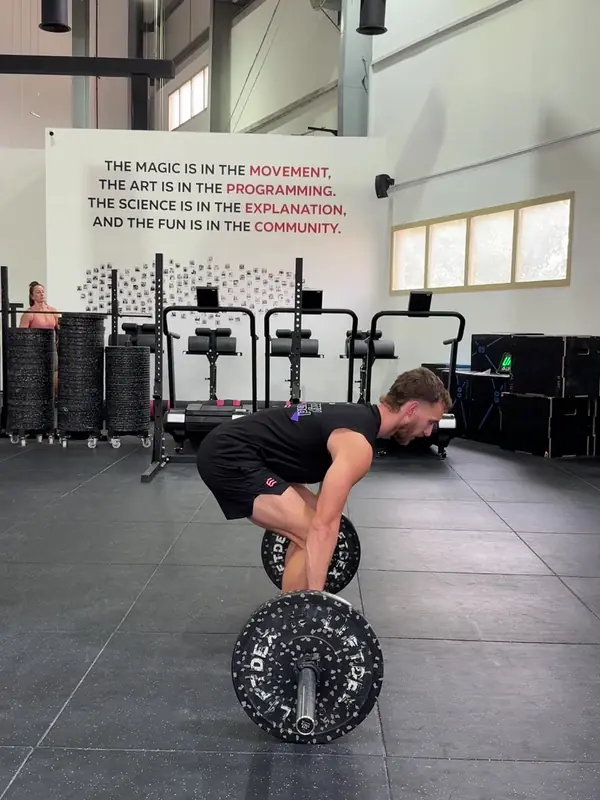
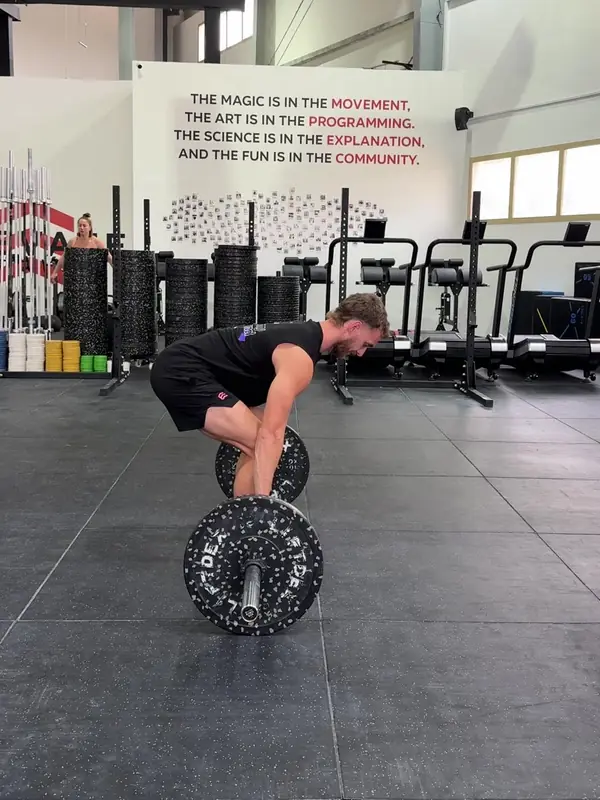
Set up with shoulders over the bar
Feet about hip-width, grip just outside your legs, chest up and back flat. Your shoulders sit just in front of the bar, like a deadlift with your hips a little lower.
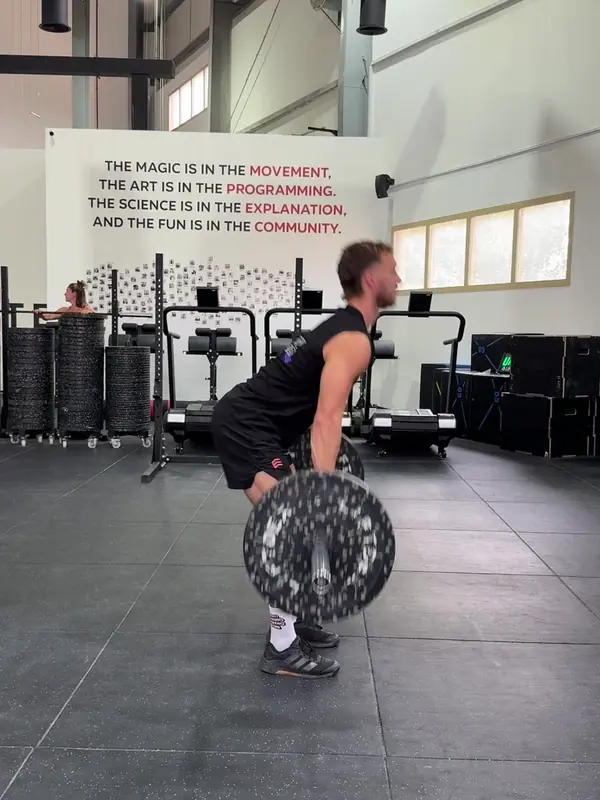
First pull: chest and hips rise together
Push the floor away with your legs and keep the bar close to your shins. Your back angle should stay the same until the bar passes your knees.
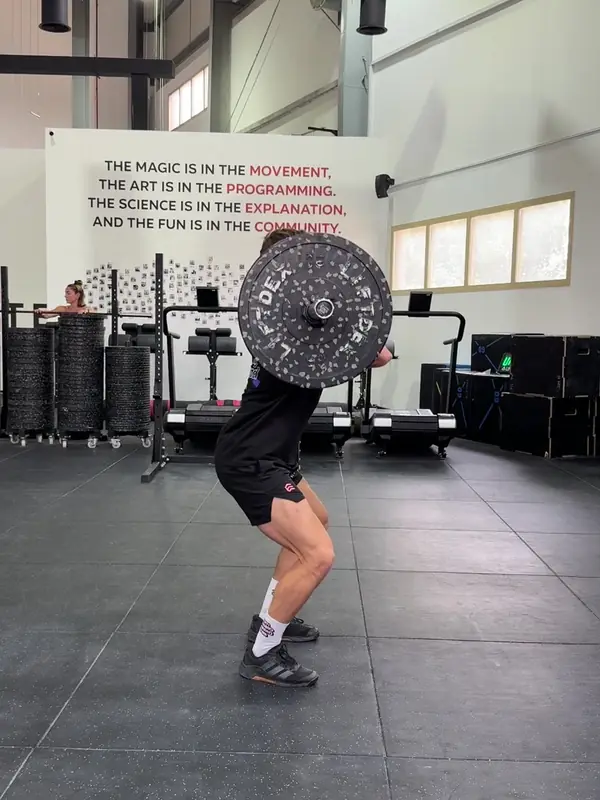
Extend and catch in the front rack
Once the bar reaches your upper thighs, extend your hips and knees hard, then pull yourself under. Whip your elbows round and catch the bar on the front of your shoulders with your elbows high, knees bent to absorb it.
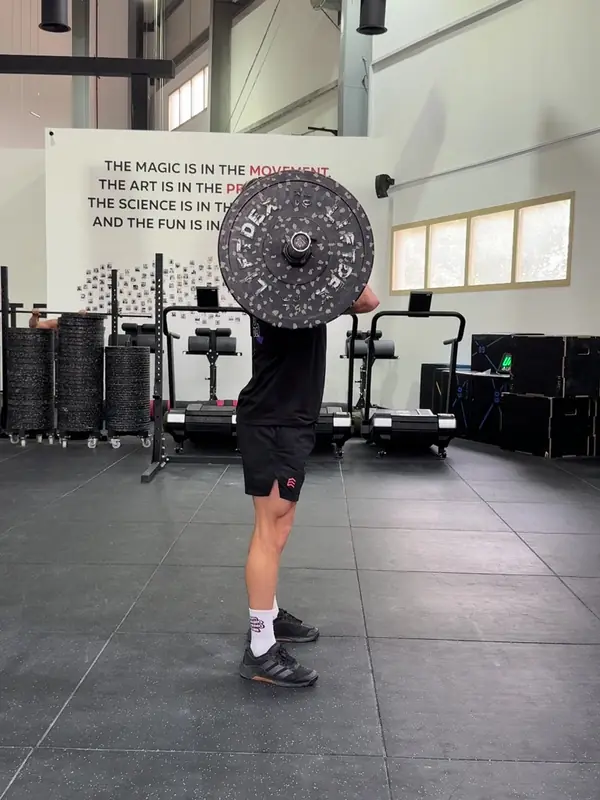
Stand up and get ready to jerk
Stand tall with the bar resting on your shoulders, elbows slightly in front of the bar and a loose grip. Take a breath and brace.
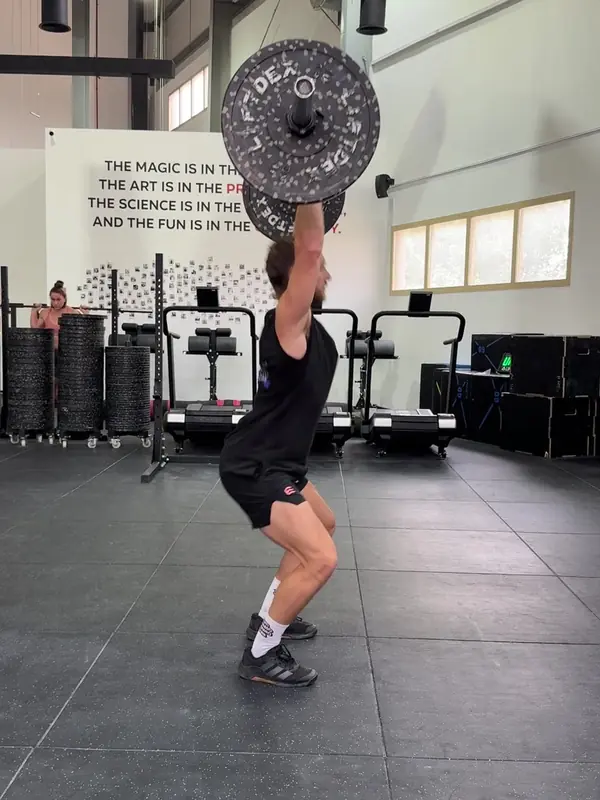
Dip, drive and catch overhead
Dip straight down a few inches with your chest up and your weight through your whole foot, slightly towards your heels, then drive up hard through your legs and punch the bar straight overhead. Catch it with your arms locked, either in a shallow squat (power jerk) or with your feet split.
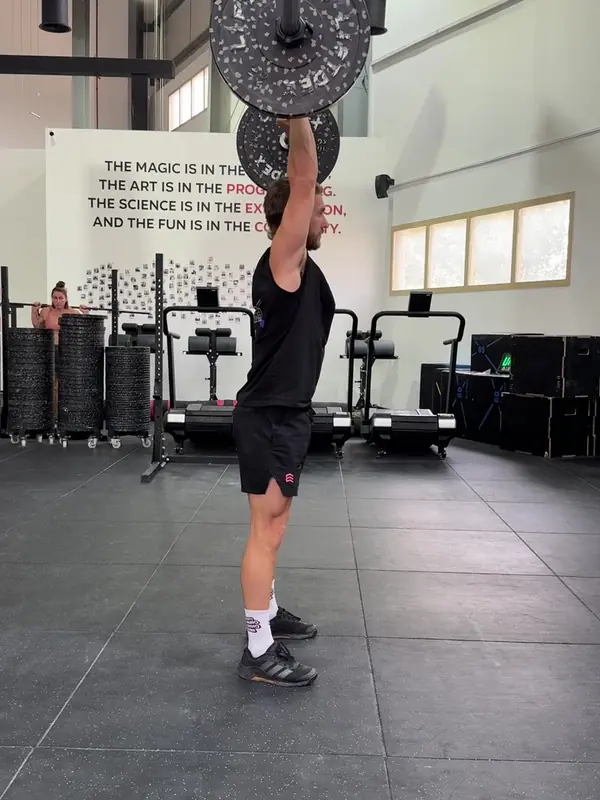
Recover and finish tall
Stand up with the bar locked out over the back of your neck, arms straight and feet together. Hold it for a moment before bringing it down.
Common mistakes and how to fix them
- Hips rising ahead of the chestPush the floor away with your legs rather than lifting with your back. Think 'legs first, chest up'.
- Pulling with the arms too earlyKeep your arms long until your hips and knees have finished extending. The arms guide the bar, the legs and hips move it.
- Dipping forward in the jerkKeep your torso upright and your weight through your whole foot as you dip. If the bar goes forward, it will land in front of you.
- Soft arms overheadPunch the bar up and lock your elbows as you land. Pressing it out is a no-lift in weightlifting and a weak position for anyone.
Drills to build it
- Hang power cleanStart with the bar at the knee or mid-thigh. It isolates the extension and the turnover without the first pull.
- Clean pullPull from the floor through full extension without catching the bar. It builds a strong, patient first pull.
- Jerk dip and driveWith an empty bar, practise dipping straight down and driving up without pressing. Add the catch once the dip feels upright.
Filming it for a form check
Film from the side, far enough back that the bar stays in shot all the way overhead. Whole body, plates and feet in view. Good light helps, and keep the phone still, propped up or on a tripod.
Want a second pair of eyes on your rep?
Rep Review is an AI form coach for iPhone. Film one rep and Riley shows you what's working, the one thing to work on next, and the drills that get you there. Coming soon to the App Store.
Find out more
Questions
Power jerk or split jerk?
Both are fine. The power jerk is simpler to learn; the split jerk lets you catch heavier weights. Use whichever keeps the bar over your middle and your arms locked.
How heavy should I start?
Start with an empty bar or a light technique bar until each position looks the same rep after rep. Speed and position matter more than load.
Why does the bar crash on my shoulders?
Usually because you catch it late or with your elbows low. Pull yourself under sooner and get your elbows round fast.
More guides
This guide is general coaching information, not medical advice. If something hurts, stop and speak to a qualified professional. Start light, and get a coach to check your technique if you can.