How to deadlift with good form
The deadlift is the simplest way to lift something heavy off the floor: you hinge at the hips, grip the bar and stand up with it. It builds your back, hips and legs, and it shows up everywhere, from strength programmes to CrossFit workouts. Good technique is mostly about where the bar starts, how you brace, and keeping the bar close all the way up.
 Demonstrated by Tom, CrossFit coach
In short
- Bar over the middle of your foot, feet about hip-width apart.
- Hinge down, grip just outside your legs, chest up and back flat.
- Brace, push the floor away and keep the bar dragging up your legs.
- Finish tall with hips and knees straight, then lower it the same way.
Step by step
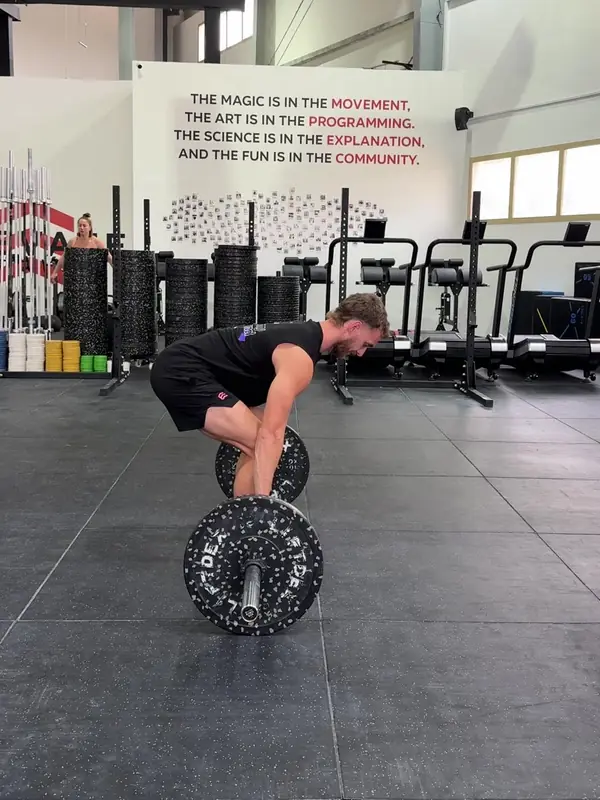
Set up over the bar
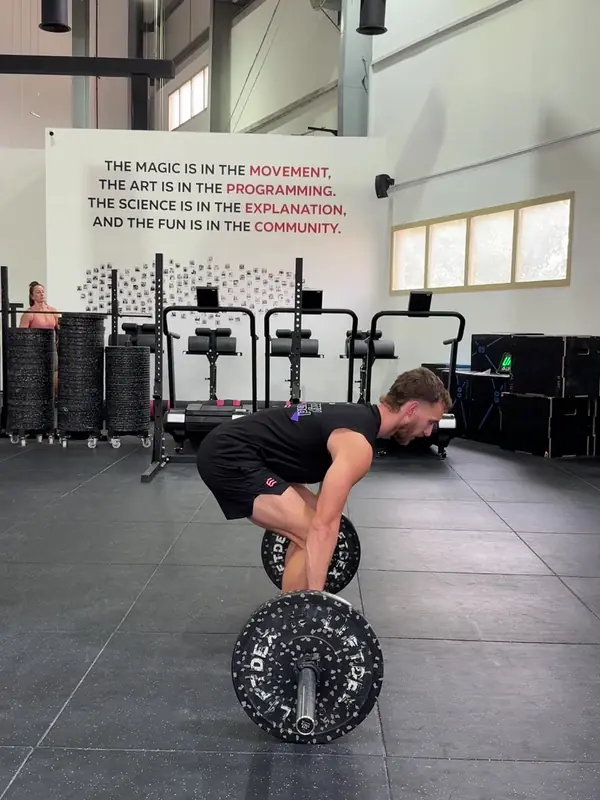
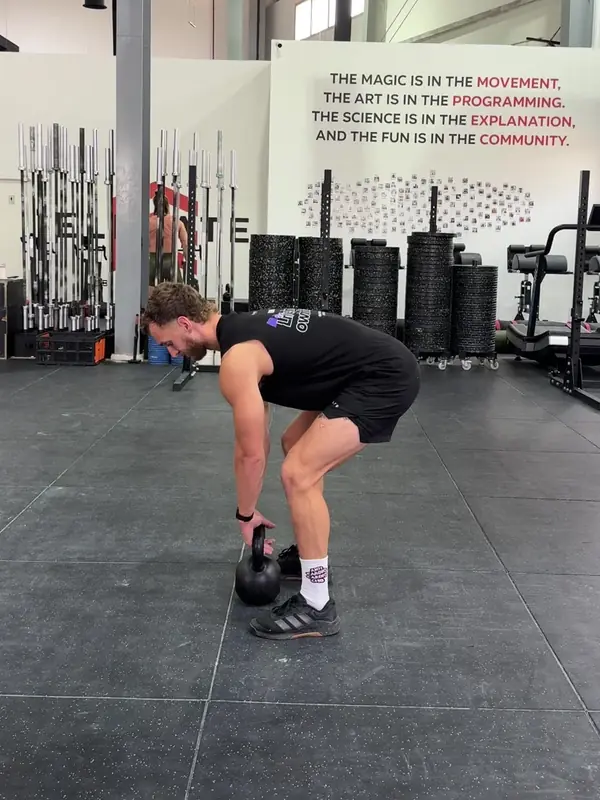
Stand with the bar over the middle of your feet, about an inch from your shins. Hinge at the hips, bend your knees until your hands reach the bar, and grip it just outside your legs. Your shoulders should sit slightly in front of the bar, with your back flat and your eyes on the floor a couple of metres ahead.
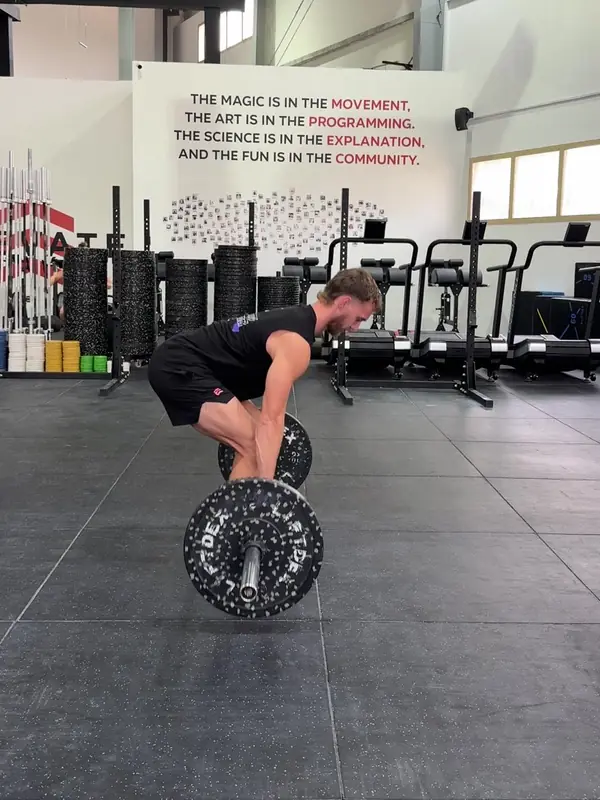
Brace and push the floor away
Take a big breath into your belly, tighten your midsection and pull the slack out of the bar before it moves. Then push the floor away with your legs. Your chest and hips should rise together, so your back angle stays the same as the bar leaves the ground.
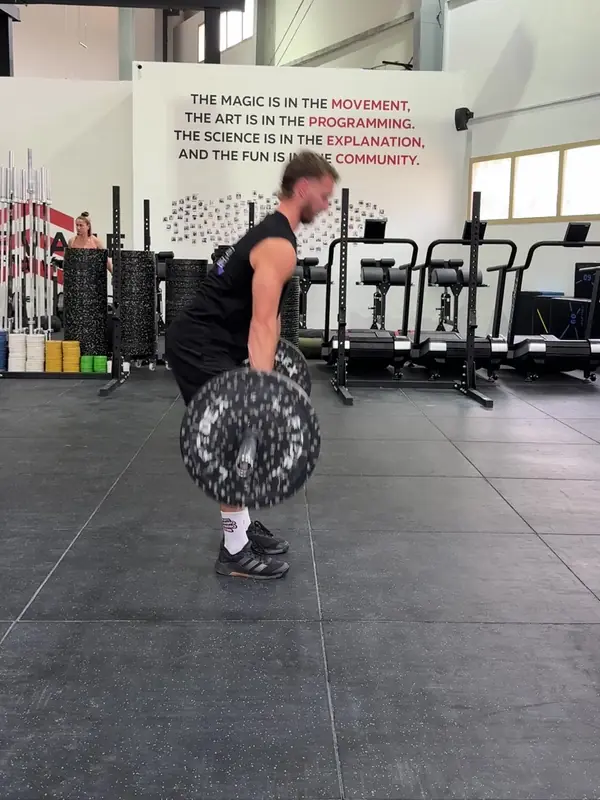
Keep the bar close past the knees
Let the bar drag up your shins and thighs. As it passes your knees, drive your hips forward. A bar that drifts away from your legs gets heavier and pulls your back out of position.
Lock out tall
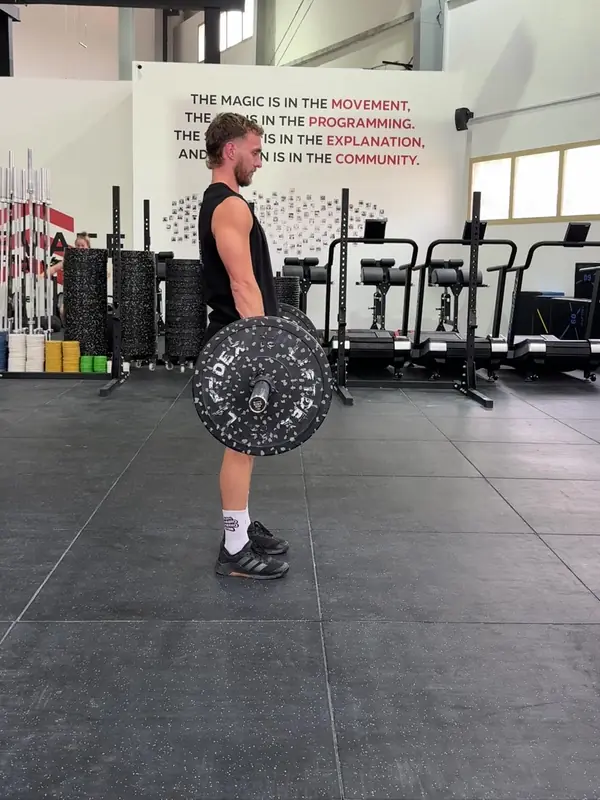
Stand up straight with your hips and knees fully extended and your shoulders stacked over your hips. There is no need to lean back or shrug: standing tall is the finish.
Lower it the same way
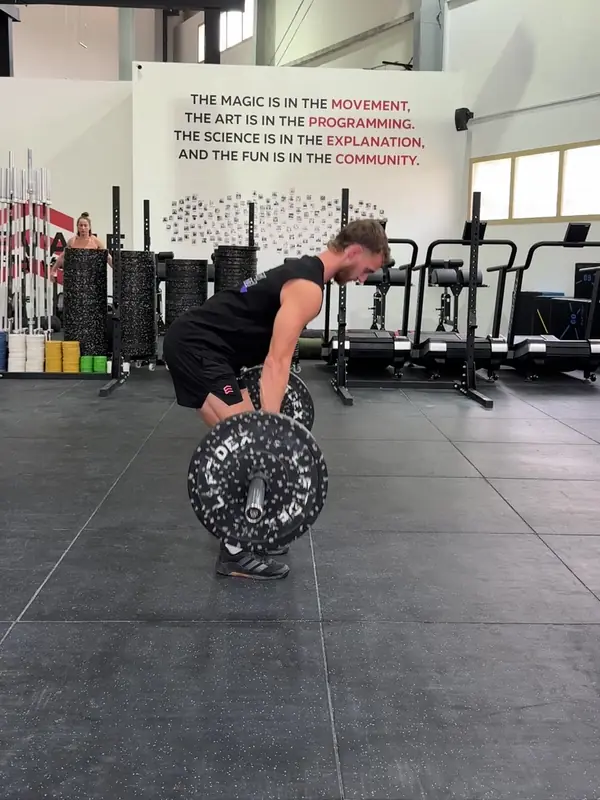
Push your hips back first and slide the bar down your thighs. Once it passes your knees, bend them to bring the bar back to the floor under control, then reset before the next rep.
Common mistakes and how to fix them
- Hips shooting up firstIf your hips rise before the bar moves, your back ends up doing the lifting. Think 'chest and hips rise together' and push through the whole foot.
- Rounding the upper backSet your lats by squeezing your armpits down, as if bending the bar around your legs, and keep your chest proud before you pull.
- Bar drifting forwardStart with the bar over mid-foot and keep it touching your legs. If it swings out, the weight is too far from your hips.
- Leaning back at the topFinish by squeezing your glutes and standing straight. Leaning back puts load on your lower back without adding anything to the lift.
Drills to build it
- Broomstick hip hingeHold a broomstick along your spine (head, upper back and tailbone touching) and practise pushing your hips back without losing contact. It teaches the hinge with no load.
- Paused deadliftPause for two seconds just off the floor and again at the knee. It shows you exactly where your position slips.
- Romanian deadliftStart standing and lower the bar to just below the knee with a slight knee bend. It builds the hamstrings and the habit of keeping the bar close.
Filming it for a form check
Film from the side at about hip height, with your whole body and the plates in shot. Two or three reps is plenty. Good light helps, and keep the phone still, propped up or on a tripod.
Want a second pair of eyes on your rep?
Rep Review is an AI form coach for iPhone. Film one rep and Riley shows you what's working, the one thing to work on next, and the drills that get you there. Coming soon to the App Store.
Find out more
Questions
Should I look up or down when I deadlift?
Keep your neck in line with your back. Looking at the floor a couple of metres in front of you is a good starting point for most people.
Is it normal to round my back a little?
A small amount of upper-back rounding happens with heavy weights, but your lower back should stay flat. If you can see it rounding, take some weight off and work on your set-up.
Mixed grip or double overhand?
Start with both palms facing you (double overhand). Use a hook grip or a mixed grip only when your grip, not your back, is what stops you.
More guides
This guide is general coaching information, not medical advice. If something hurts, stop and speak to a qualified professional. Start light, and get a coach to check your technique if you can.