How to do a lunge with good form
The lunge is a squat in a split stance, with most of the work on your front leg. It builds your quads and glutes, trains your balance, and shows up everywhere from beginner programmes to CrossFit workouts with dumbbells or a barbell. Tom demonstrates the forward lunge here: you step forward, drop your back knee towards the floor and drive back to standing.
 Demonstrated by Tom Wyn-Williams, CrossFit coach
In short
- Stand tall with your feet hip-width apart.
- Take a long step forward, keeping your feet hip-width apart side to side.
- Drop your back knee straight down until it's just above the floor.
- Push through your front foot to step back to standing, then switch legs.
Step by step
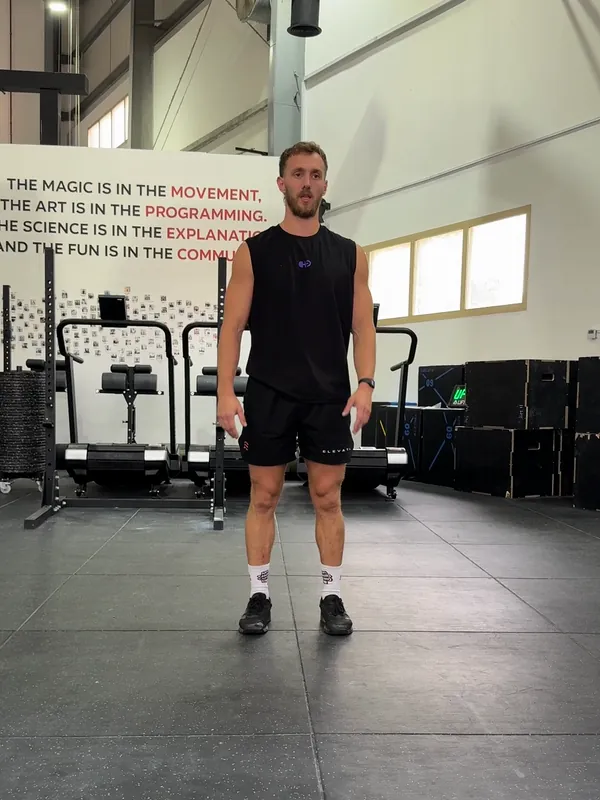
Stand tall
Stand with your feet hip-width apart, weight spread evenly across both feet, chest up and eyes forward. Brace your midsection lightly before you move.
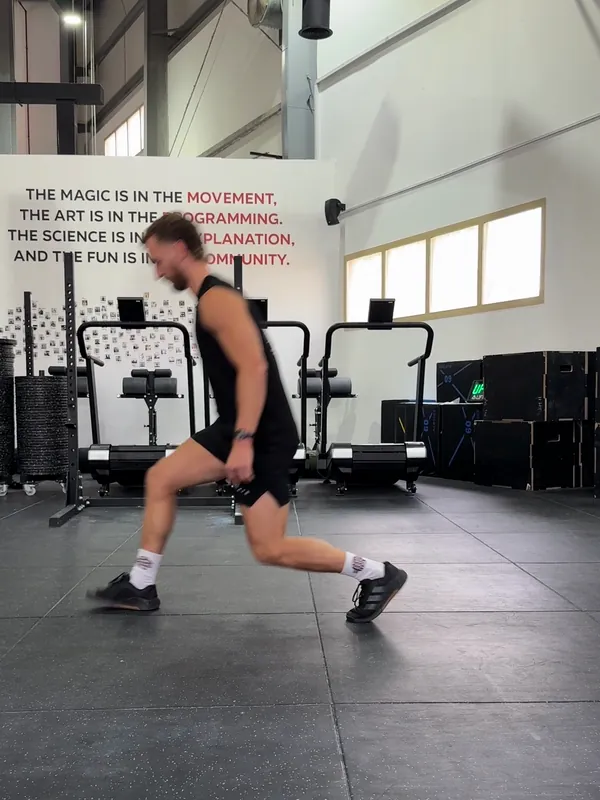
Take a long step forward
Step forward far enough that both knees can bend to about 90 degrees at the bottom. Land heel first, plant your whole foot and keep your feet hip-width apart side to side, not one in front of the other as if on a tightrope.
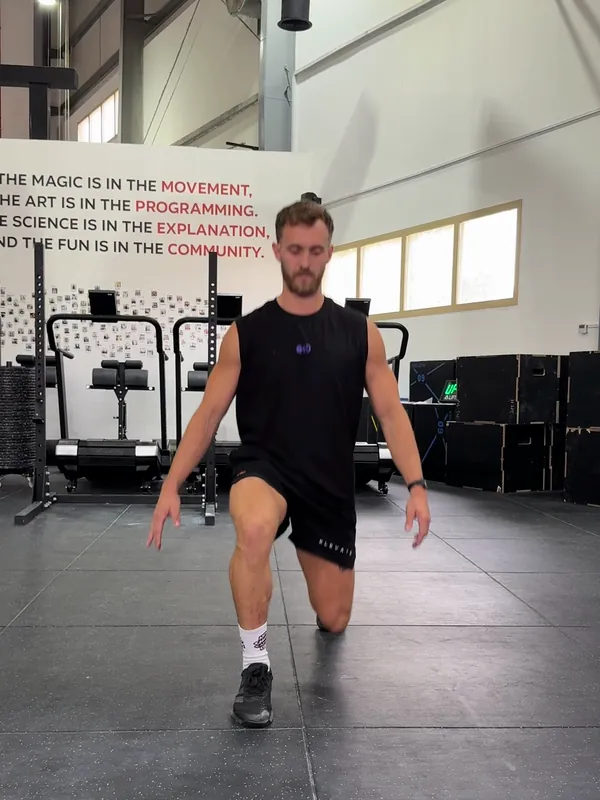
Drop the back knee straight down
Lower by bending both knees, so you travel down rather than forward. Stop when your back knee is just above the floor. From the front, your front knee should stay in line with your foot rather than caving inwards.
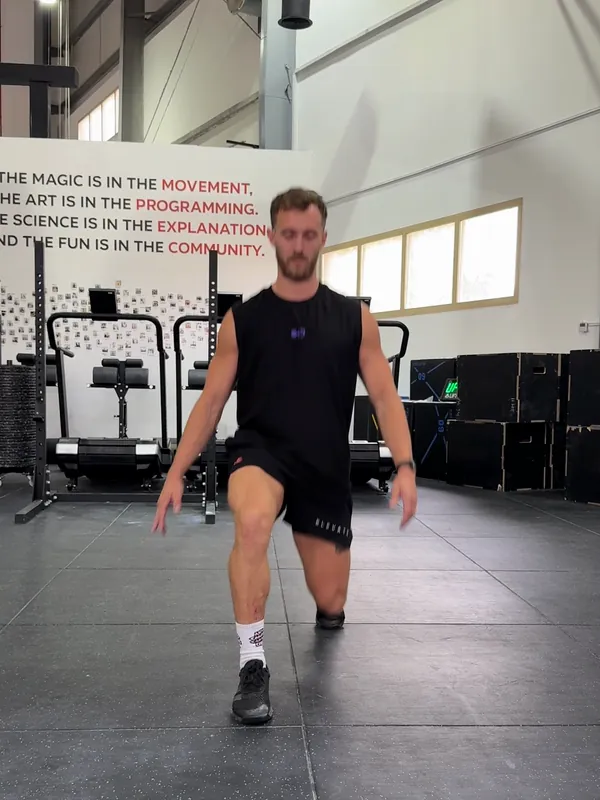
Drive back to standing
Push hard through your whole front foot to rise out of the bottom, then step back to where you started. Stand tall, reset, then lunge with the other leg.
Common mistakes and how to fix them
- Front knee caving inIf your front knee collapses inwards, push it out over your middle toes and take a slightly wider stance side to side.
- Step too shortA short step jams your front knee forward and lifts your heel. Lengthen the step until your front heel stays down at the bottom.
- Chest collapsing onto the thighA little forward lean is fine, but if your chest folds onto your front thigh you lose balance and power. Keep your chest up and your eyes forward.
- Slamming the back kneeLower under control and stop just above the floor. Banging the knee down makes you lose tension and is hard on the joint.
Drills to build it
- Split squatSet up in the bottom of the lunge stance and go straight up and down without stepping. It grooves the knee position before you add the step.
- Reverse lungeStep backwards instead of forwards. It's easier to balance and kinder on the front knee, so it's a good place to start.
- Supported lungeHold a rack, wall or chair with one hand while you lunge. It takes balance out of it so you can focus on depth and knee position.
Filming it for a form check
Film two clips if you can: one from the side at hip height to check your depth and step length, and one from the front to check your front knee stays in line with your foot. Keep your whole body in shot and the phone still.
Want a second pair of eyes on your rep?
Rep Review is an AI form coach for iPhone. Film one rep and Riley shows you what's working, the one thing to work on next, and the drills that get you there. Coming soon to the App Store.
Find out more
Questions
Forward or reverse lunge?
Both train the same main muscles. The reverse lunge is easier to balance and easier on the knees, so start there if forward lunges feel awkward.
Can my front knee go past my toes?
A little is fine as long as your front heel stays down and the knee tracks over your foot. The old rule that it must never pass your toes is overstated.
How deep should I go?
Aim for your back knee just above the floor with both knees bent to about 90 degrees. Go as deep as you can while keeping control.
Should I hold weights?
Learn it with bodyweight first. Once you can do 10 controlled reps each leg, add dumbbells held at your sides.
More guides
This guide is general coaching information, not medical advice. If something hurts, stop and speak to a qualified professional. Start light, and get a coach to check your technique if you can.