How to do a push-up with good form
The push-up is one of the simplest strength exercises there is: no kit, just you and the floor. It builds your chest, shoulders and arms, and it trains your midsection to hold your body in one straight line. In the UK it's usually called a press-up. Good form comes down to two things: a body that stays rigid from head to heels, and a full range of motion on every rep.
 Demonstrated by Tom Wyn-Williams, CrossFit coach
In short
- Hands just wider than your shoulders, arms straight, body in one line.
- Lower your whole body together, elbows travelling back rather than out.
- Go down until your chest is just above the floor.
- Press the floor away and finish with straight arms, still in one line.
Step by step
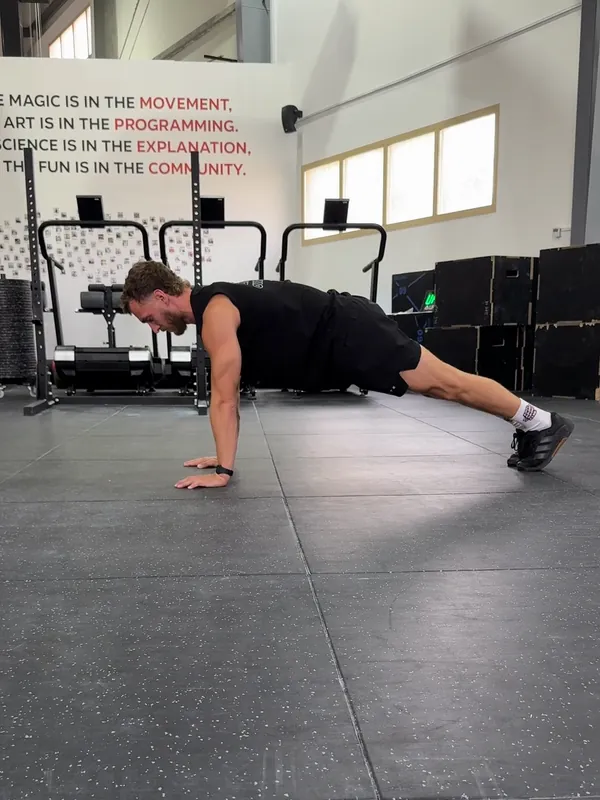
Set up in a strong plank
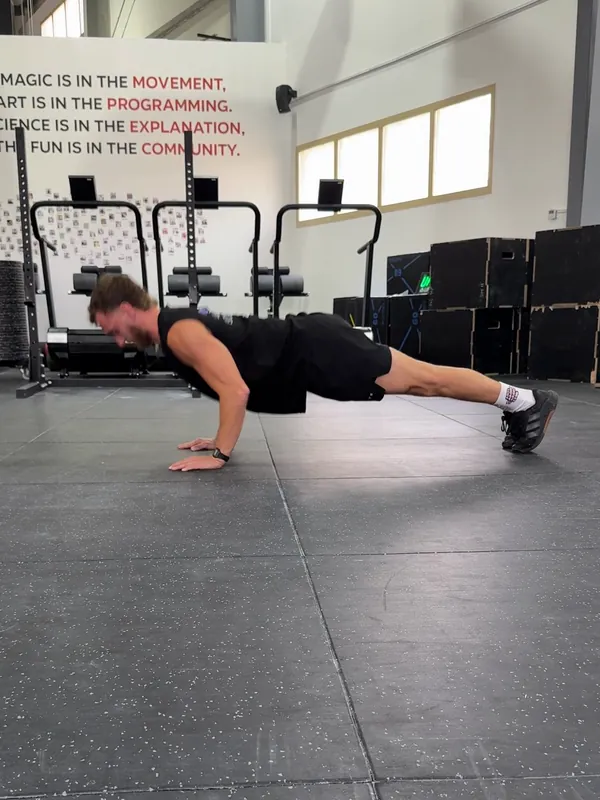
Put your hands on the floor a little wider than your shoulders, arms straight, feet together or hip-width apart. Squeeze your glutes and brace your midsection so your body makes one straight line from your head to your heels.
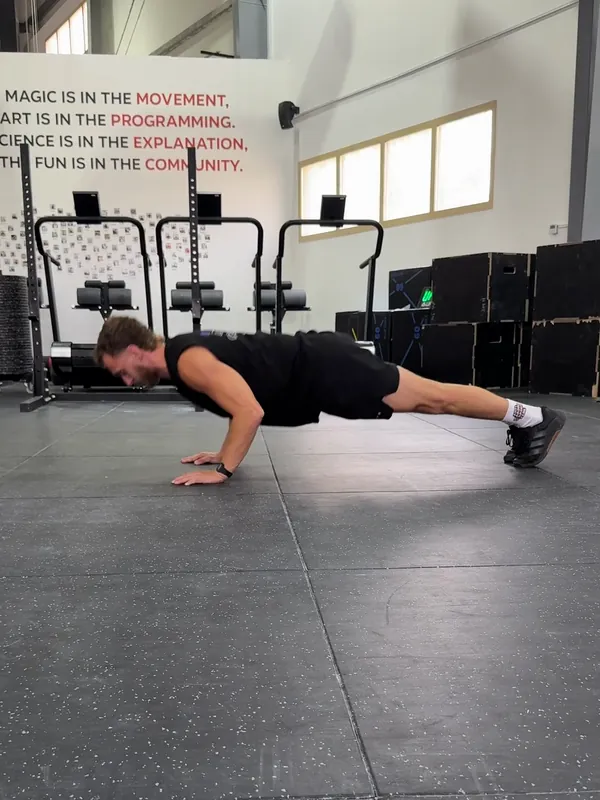
Lower as one piece
Bend your elbows and lower your whole body together. Let your elbows travel back at roughly 45 degrees from your sides rather than flaring straight out, and keep your neck in line instead of reaching for the floor with your chin.
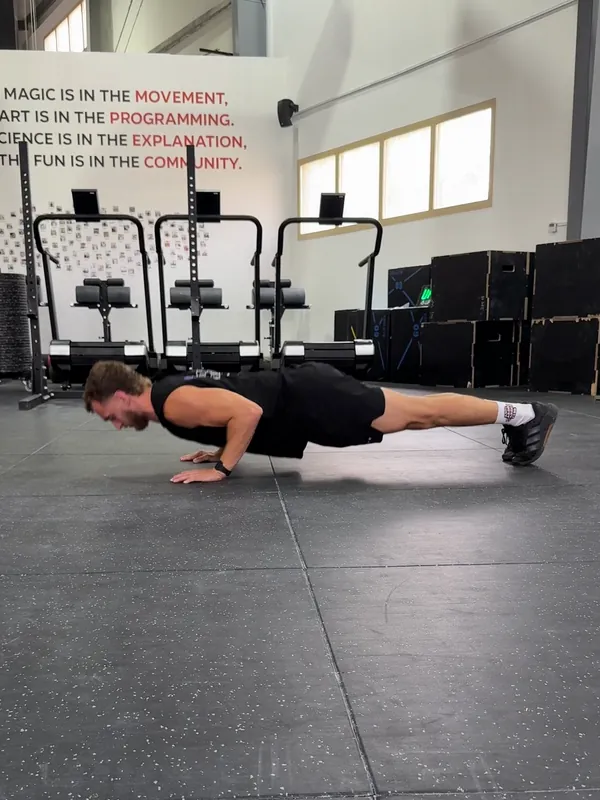
Chest to just above the floor
Keep going until your chest is a fist's height or less from the floor. Your hips and shoulders should arrive together. If your hips touch first, your midsection has switched off.
Press the floor away
Push the floor away and rise as one solid unit, chest and hips together, until your arms are straight. Finish in the same plank you started in, then go again.
Common mistakes and how to fix them
- Hips saggingIf your hips drop towards the floor, your lower back takes the strain. Squeeze your glutes and brace as if someone is about to poke your stomach, and stop the set when you can't hold the line.
- Hips piking upA bottom stuck in the air shortens the rep and takes work off your chest. Lower your hips until your body is straight, and use an incline if you need to.
- Elbows flaring outElbows pointing straight out to the sides load the front of the shoulder. Tuck them back to about 45 degrees, like an arrow rather than a T.
- Half repsStopping halfway down builds less strength. Lower until your chest is just above the floor, even if that means fewer reps or an easier version.
Drills to build it
- Incline push-upsPut your hands on a bench, box or kitchen worktop. You keep the full plank but lift less of your bodyweight. Lower the height as you get stronger.
- Slow loweringLower for three to five seconds, then drop to your knees to get back to the top if you can't press up yet. It builds the strength for the whole rep.
- Plank holdsHold the top of the push-up for 20 to 30 seconds with your glutes squeezed. If you can't hold the line still, you can't hold it while moving.
Filming it for a form check
Film from the side with the phone at floor height, propped up on something steady, and your whole body in shot from head to feet. Good light helps, and keep the phone still.
Want a second pair of eyes on your rep?
Rep Review is an AI form coach for iPhone. Film one rep and Riley shows you what's working, the one thing to work on next, and the drills that get you there. Coming soon to the App Store.
Find out more
Questions
Is a push-up the same as a press-up?
Yes. Press-up is the usual name in the UK, push-up in the US. The technique is the same.
How wide should my hands be?
Just wider than your shoulders for a standard push-up. Narrower puts more work on your triceps; much wider tends to put more strain on your shoulders.
Are knee push-ups OK?
Yes, as a stepping stone. Incline push-ups are often the better option because you still hold the full-body plank you need for the real thing.
How many push-ups should I be able to do?
There's no single standard. A useful first goal is 10 good reps with a straight body and full range. Quality first, then build the number.
More guides
This guide is general coaching information, not medical advice. If something hurts, stop and speak to a qualified professional. Start light, and get a coach to check your technique if you can.